
What Is Plant-Based Leather, Really?
Most things sold as “vegan leather” are plastic. PU, PVC, some blend of the two — petroleum dressed up to look like something it isn’t. That’s not what we work with, and it’s not what this piece is about.
Plant-based leather is a different category entirely. It’s a material family built from agricultural sources — cactus, coconut husk, bagasse (sugarcane fibre), and other by-products that would otherwise go to waste — processed into a leather-like material that can be cut, stitched, and shaped the same way traditional leather is.
We’re not going to tell you it’s identical to hide leather. It isn’t. But it’s not trying to be. It’s its own material, with its own case to make.
How Plant-Based Leather Is Actually Made
The process varies by source material, but the general path looks like this:
1. Raw material collection — cactus paddles, coconut husks, or bagasse fibre left over from other agricultural processes are harvested or reclaimed.
2. Fibre extraction and drying — the raw material is broken down into a pulp or fibre base, then dried.
3. Bonding and layering — the fibre is combined with a backing material to create structure, strength, and flexibility.
4. Finishing — the surface is treated and, where relevant, dyed using plant-based dyes to get colour that holds without shortcuts.
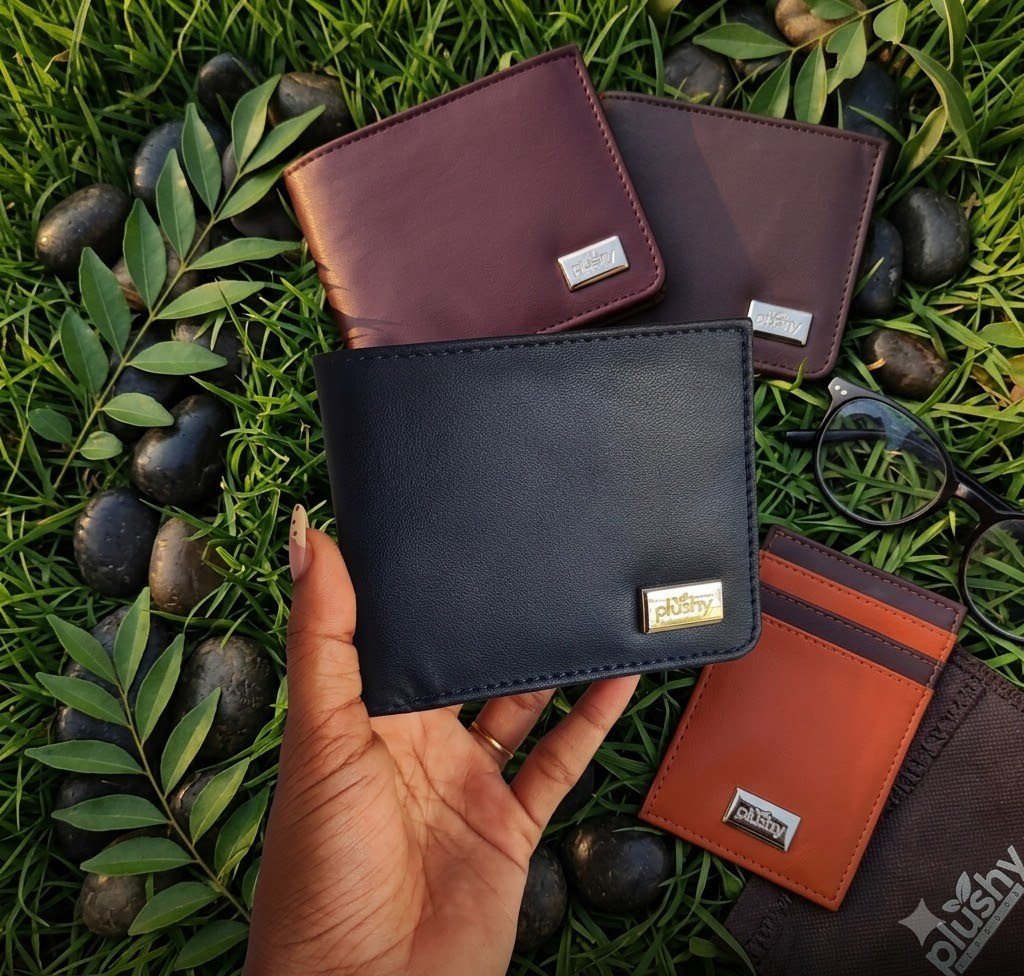
The result is a material with grain, texture, and drape that can genuinely stand in for traditional leather in small-format goods like wallets and card holders — without an animal or a barrel of petrochemicals involved.
Cactus, Bagasse, and Coconut — What's the Difference?
Cactus leather is made primarily from mature nopal cactus paddles. The plant is harvested without killing it — new paddles regrow, and the crop needs very little water, which matters in cactus-growing regions where water scarcity is a real constraint.
Bagasse leather uses the fibrous pulp left over after sugarcane is crushed for juice or sugar. It’s a by-product of an industry that already exists at scale, which means the base material isn’t grown for the leather — it’s rescued from what would otherwise be discarded or burned.
Coconut leather typically draws on coconut husk fibre, another agricultural by-product, valued for its durability and texture.
None of these is universally “better” — they behave differently, age differently, and suit different products. That’s part of why we treat material selection as an ongoing process rather than a settled answer.
Plant-Based Leather vs Real Leather vs Synthetic "Vegan Leather"
Traditional Leather
– Source: Animal hide
– Animal involvement: Yes
– Biodegradability: Slow, but eventual
– Feel over time: Develops patina
– Common concerns: Tanning chemicals, animal welfare
Synthetic “Vegan Leather” (PU/PVC)
– Source: Petroleum-based plastic
– Animal involvement: No
– Biodegradability: Effectively none
– Feel over time: Tends to crack or peel
– Common concerns: Microplastics, non-biodegradable
Plant-Based Leather
– Source: Agricultural by-products (cactus, bagasse, coconut)
– Animal involvement: No
– Biodegradability: Higher, depending on backing material
– Feel over time: Holds form with proper care
– Common concerns: Newer category, backing material still matters
The honest caveat: most plant-based leathers still use a small percentage of synthetic backing for durability. Anyone claiming a wallet is 100% plant matter with zero synthetic component is usually simplifying. What you want to look for is the ratio and the sourcing of the plant content — not a marketing absolute.
Does It Actually Last?
This is the question that matters more than the origin story. A material can be sustainably sourced and still fall apart in six months — that’s not a trade worth making.
Durability comes down to three things: the quality of the fibre bonding, the backing layer, and the finishing. A well-made plant-based leather wallet, handled the way you’d handle any wallet — kept dry, wiped down rather than scrubbed, stored out of direct sunlight — holds its shape and colour over years of daily use, not weeks.
Is It Right for You?
If you’re choosing a wallet or card holder and animal-derived materials aren’t a fit for you — for ethical, environmental, or simply personal reasons — plant-based leather is a legitimate alternative, not a compromise. It won’t behave exactly like a decades-old hide wallet, and it isn’t trying to. It’s a considered material choice for people who want their everyday carry to reflect how they actually think, not just what’s traditional.
At Plushy Skinn, our Harvest Series is built from cactus, coconut, and bagasse-based materials — chosen thoughtfully, not as a finished claim but an ongoing one. Explore the collection.